Inguma
Ofrenda a la tormentaInguma is a night demon said to enter the rooms of sleeping people and steal their breath, especially that of children. In the novel, he is at once a figure of local folklore, a name attached to unexplained infant deaths, and the supernatural rationale invoked by a secret group whose rites end in murder. The narrative does not establish that the demon exists; instead, it traces how an old explanation of nocturnal fear can be made to serve as both a cultural memory and a justification for human violence.
Identity and Folklore
In the stories told about him, Inguma slips into a bedroom through even a tiny opening and settles over a sleeping person. The victim may feel unable to move or breathe, and the encounter may be understood as a nightmare, an attack by a spirit, or a death in sleep. The legend gives a frightening presence and an apparent intention to experiences that otherwise seem inexplicable: someone has come in the night to take a sleeper’s breath.
The tradition is presented as older than the novel’s investigation. A child’s great-grandmother says that Inguma has appeared before and taken many children on each occasion. In the historical account she recounts, adults attributed a mass loss of children to the demon even when doctors named whooping cough. The story thus preserves a conflict between supernatural and medical explanations rather than supplying a single reliable account of the past. Its recurrence makes Inguma a figure through whom communal memory gives shape to repeated deaths.
The legend also has a protective practice associated with it: people recited a formula before sleep to assert that they were not afraid. The importance lay in speaking first, as if naming the threat and refusing fear could establish a boundary against it. Inguma’s ability to enter through the smallest crack makes that boundary seem precarious, but the spoken formula represents an attempt to answer fear with deliberate action.
A Shared Figure and a Medical Explanation
When Amaia asks Sarasola about Inguma, he places the figure within a much wider family of traditions. He links the local demon to Lamashtu in Sumerian demonology, and describes comparable figures or names in other cultures, including Batibat in the Philippines. Across these accounts, the recurring pattern is a threatening presence during sleep, pressure or restriction of breathing, and a victim who may be conscious of the experience but unable to move or wake. The similarity does not prove that the traditions describe one literal being; in the novel, it shows how different cultures have given names to experiences with strikingly similar features.
The account also distinguishes the folkloric explanation from sleep-related phenomena. Sarasola describes sleep apnea as a condition in which breathing stops temporarily during sleep, and explains that severe nightmares and sleep paralysis can involve a perceived presence in the room, immobility, and a sensation of suffocation. He connects such experiences to terror during sleep and to stress, drawing on cases he says he studied, including reports of Japanese soldiers who died while asleep. The scientific explanation helps account for the terror and bodily sensations, but does not make the deaths in those accounts imaginary; nor does it resolve every event investigated in the novel.
That uncertainty reaches Amaia personally. Her own nightmares can feel exceptionally vivid: she is aware of sleeping and of someone entering the room, and wonders how much she might perceive if the feared presence came closer. The narration places that fear beside the legend of Inguma without confirming a supernatural attack. The demon therefore belongs not only to old stories and reported deaths but also to the language through which Amaia confronts her vulnerability and the possibility that a nightmare might feel indistinguishable from an assault.
Inguma in Amaia’s Investigation
As unexplained deaths and other anomalies accumulate in the valley, Amaia sees a disturbing connection between infants dying in sleep and the dark figure of local mythology. Engrasi supplies the name Inguma, and Amaia recalls Sarasola’s explanation that similar demons appear in multiple cultures. She describes the reported pattern as geographically concentrated, affecting a particular age and sex group, with deaths recurring during sleep. Her comparison opens the possibility that repeated infant deaths have been interpreted through a shared supernatural motif, while the investigations around her raise the more immediate question of whether someone has deliberately recreated the conditions described in the legend.
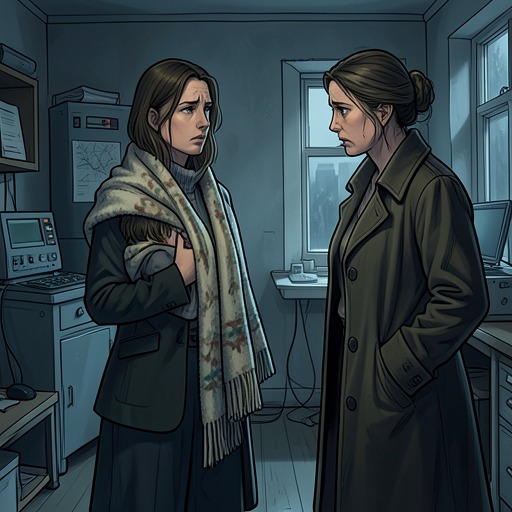
The thought becomes more urgent because Amaia’s son has nearly been used in a ritual offering. She asks whether someone could have brought Inguma back to claim more victims, and wonders why anyone would take the body of a dead baby. These are questions and suspicions, not proof that a demon has returned. Engrasi’s response likewise treats the possible return conditionally: if someone has summoned the guardian, an extraordinary offering may have been required. The idea links reported grave desecrations, the empty grave of Amaia’s sister, and the attempted sacrifice of her son, turning separate pieces of evidence into a hypothesis about a recurring rite.
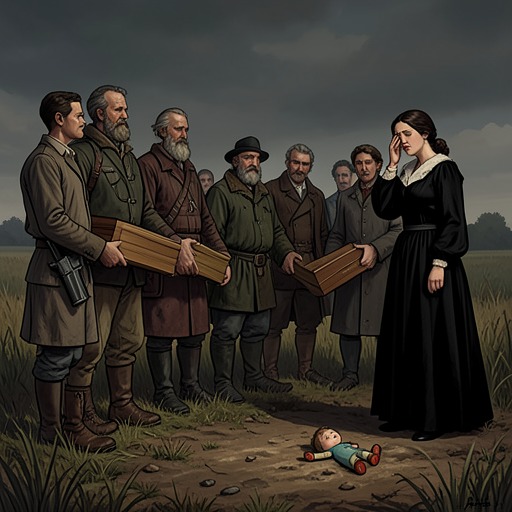
Other characters use the name more directly. After Valentín Esparza’s words are read from a prison recording, Zabalza reports that Esparza said he had given his daughter to Inguma as one sacrifice among many. The child’s great-grandmother also interprets the removal of the girl’s body as Inguma taking what had become an offering. These statements do not identify a supernatural perpetrator. They reveal instead that the demon’s name is present in the language of people connected to the deaths, where it can express inherited belief and make a child’s death part of a larger ritual account.
The Cult’s Ritual Doctrine
The investigation eventually exposes a group whose members believe that forces can be invoked and put to use through offerings. Their doctrine turns Inguma from a folkloric explanation of infant death into the recipient of a planned human sacrifice. According to testimony, the group held that the most suitable victim was a girl younger than two, whose soul was believed to remain between two worlds. The child was also supposed to be unbaptized, and the killing was to imitate the demon’s traditional manner of taking breath. The corpse then had to be carried elsewhere to complete the rite, although the witness did not know the destination.
The promised rewards were worldly as well as spiritual: participants expected wealth, while parents believed they could obtain what they personally desired. The ritual was not described as an isolated act but as part of a system of offerings, beginning with animals and culminating in what members called the sacrifice. Its logic made the child’s age, sex, and circumstances significant, and gave the violence a prescribed form. In Amaia’s confrontation with the doctrine, the supposed offering is plainly named for what it is: murder.
The group’s teaching also frames sacrifice as a cycle. Inguma was said to take victims of one sex and age group under similar circumstances until the cycle was complete. Members were instructed that a new child might follow the loss of an infant; women who had difficulty accepting another pregnancy could suffer depression, while some reportedly had not known what their husbands intended. In this account, a belief in the demon does not merely explain death after it occurs. It shapes the group’s expectations of families before and after a child is sacrificed, and binds members to a system in which grief becomes part of the supposed debt.
Meaning and Unresolved Status
Inguma’s role depends on the gap between what characters believe and what the investigation can establish. Folklore presents him as a being that steals breath; medical explanations describe sleep disturbance and breathing disorders; the group treats him as a power that can be fed through offerings. The novel allows these accounts to echo one another without treating them as equivalent. Similar experiences across cultures may help explain the persistence of the legend, but they do not verify the demon. The cult’s actions, by contrast, are human acts, whatever supernatural meaning its members assign to them.
At the novel’s later confrontation, one adherent describes himself as a channel for a religion rooted beneath the stones of the local community, and argues that sacrifice is an ancient price for extraordinary reward. Amaia rejects the premise that the group is feeding a power: to her, giving children to a demon is murder. This clash brings the central distinction into focus. Inguma may remain uncertain as a supernatural presence, but invoking him has material consequences: it can turn a child into an offering in the minds of adults, conceal responsibility behind ritual language, and make an old night terror part of a deliberate human crime.